Graffiti Removal from a Corten Steel Footbridge Over Water
Case study: clearing graffiti from a public footbridge spanning a river, where nothing could enter the water and the weathered steel patina had to survive intact.
The challenge
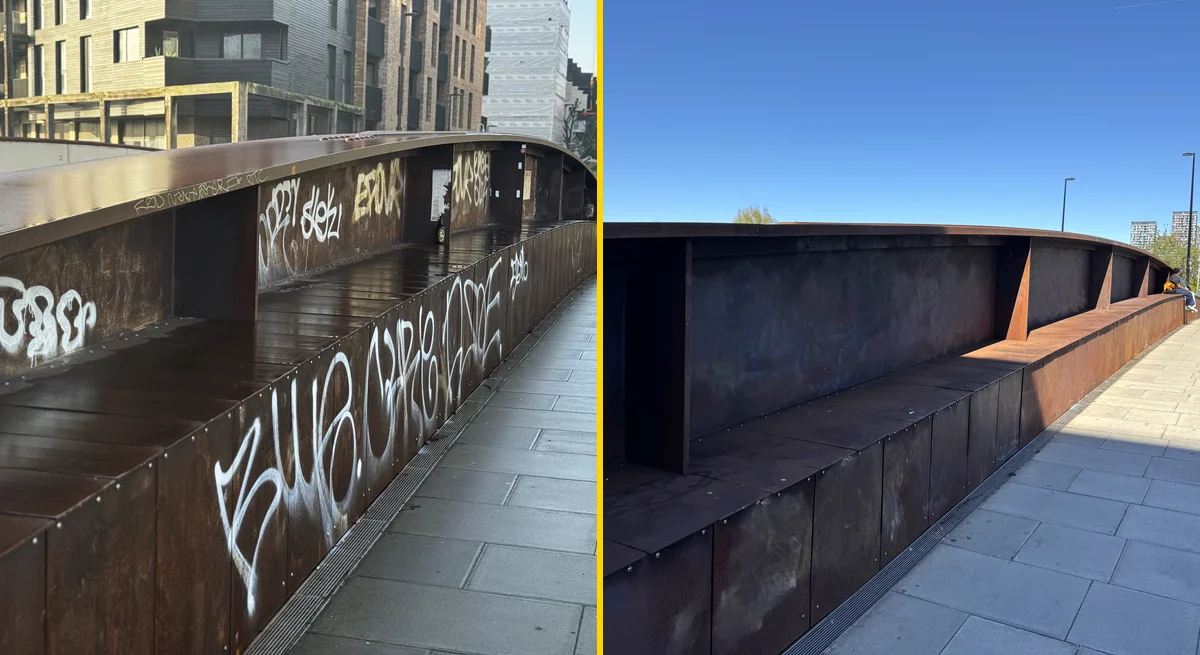
A public footbridge in the Olympic Park, built from corten weathering steel, tagged the length of both parapets. Two constraints made this harder than an ordinary graffiti job.
The bridge crosses water. Nothing could be allowed to enter the river — no solvent, no chemical remover, no wash water, no spent abrasive. That single line rules out most of the graffiti removal industry.
The second constraint is the steel. Corten is designed to corrode in a controlled way and form a stable rust patina, and that patina is the finish. It is not a coating over the steel, it is the steel. Remove it and you expose bright metal that has to re-weather from scratch over years, coming back blotchy. A repair that clears the graffiti but leaves pale patches down the parapet has not solved the problem.
 Before
 After
Why dry ice was the only option
We looked at the alternatives first. Each failed on one of the two constraints.
- Chemical removers produce contaminated wash water. Over a river that means total containment and capture, and any failure goes straight into the watercourse.
- Dustless wet blasting is excellent on steel, but it makes slurry and it cuts. The water rules out the first, the patina the second.
- Dry abrasive takes the patina off with the paint and scatters spent grit into the river below.
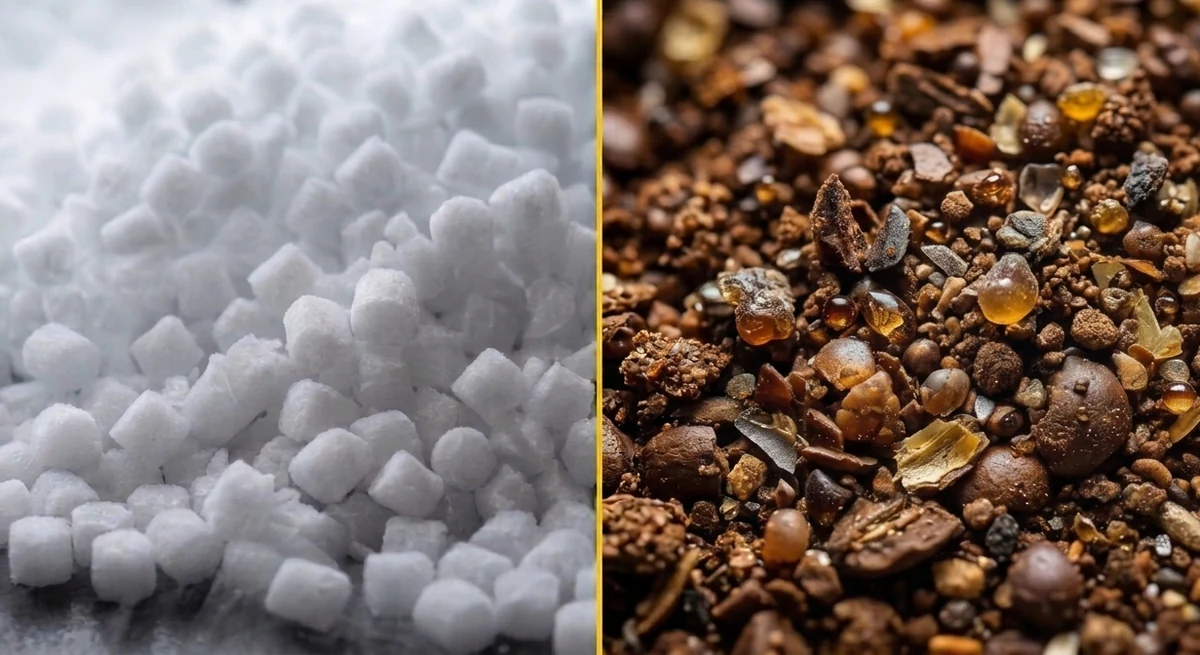
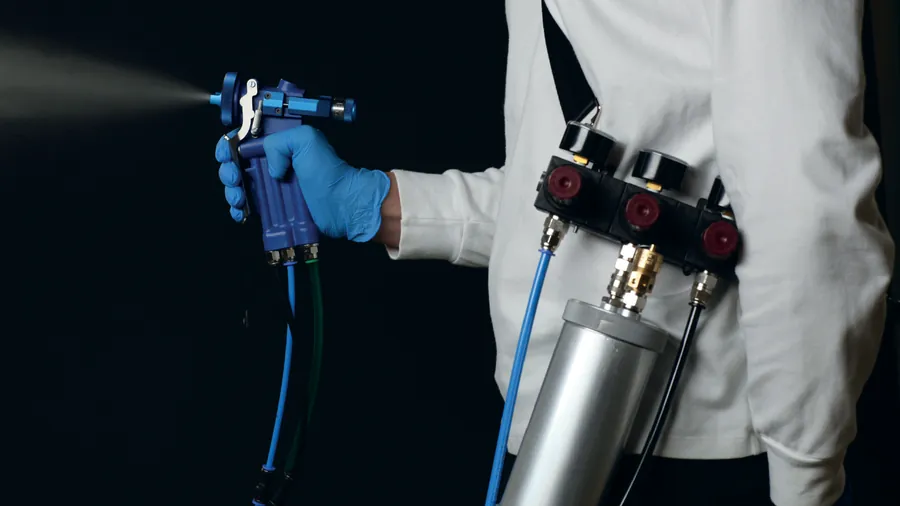
Dry ice satisfied both. The medium is solid CO2: it sublimates to gas on impact and leaves nothing behind, so there is no slurry, no runoff and no spent abrasive to contain. The only waste is the paint particulate itself, which is sheeted and collected. And because it cleans by thermal shock rather than abrasion, it lifts the paint off the surface without cutting into it.
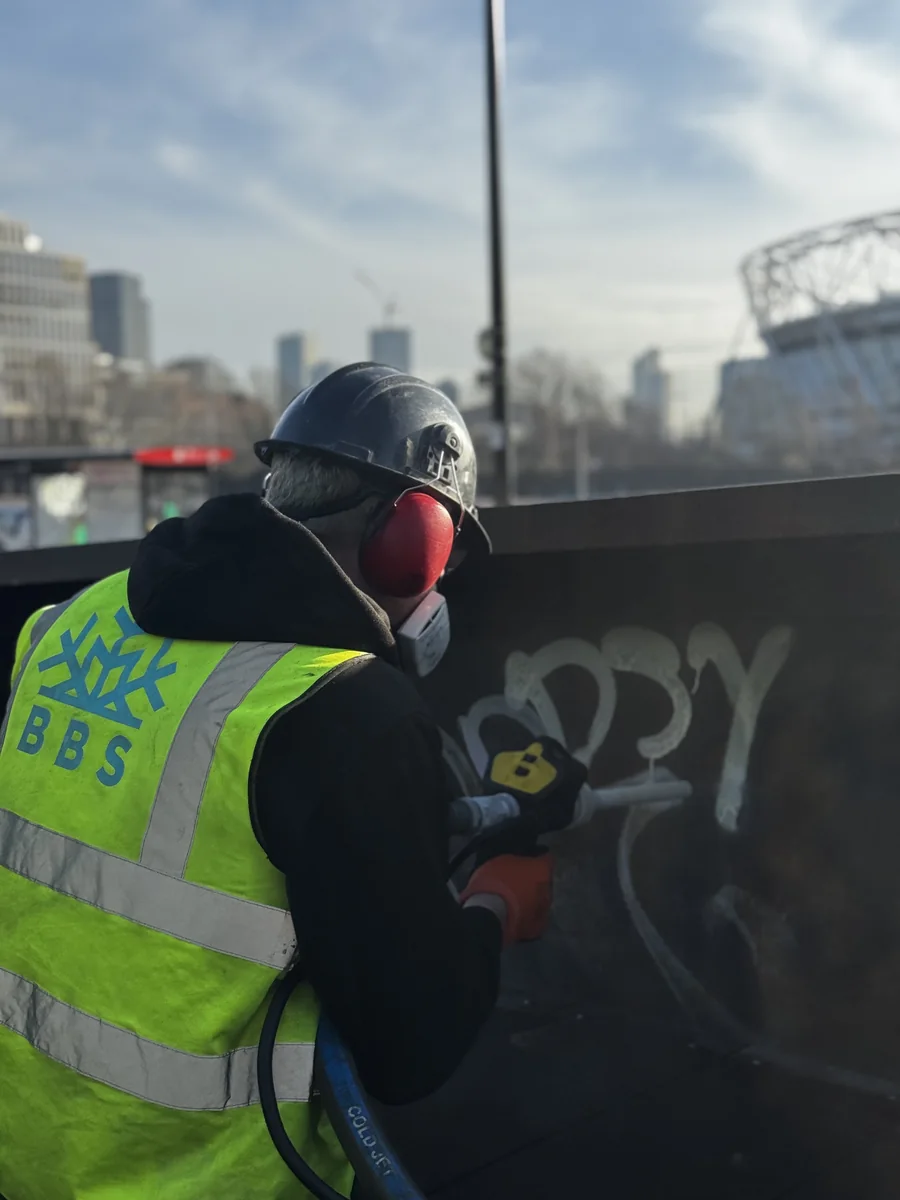
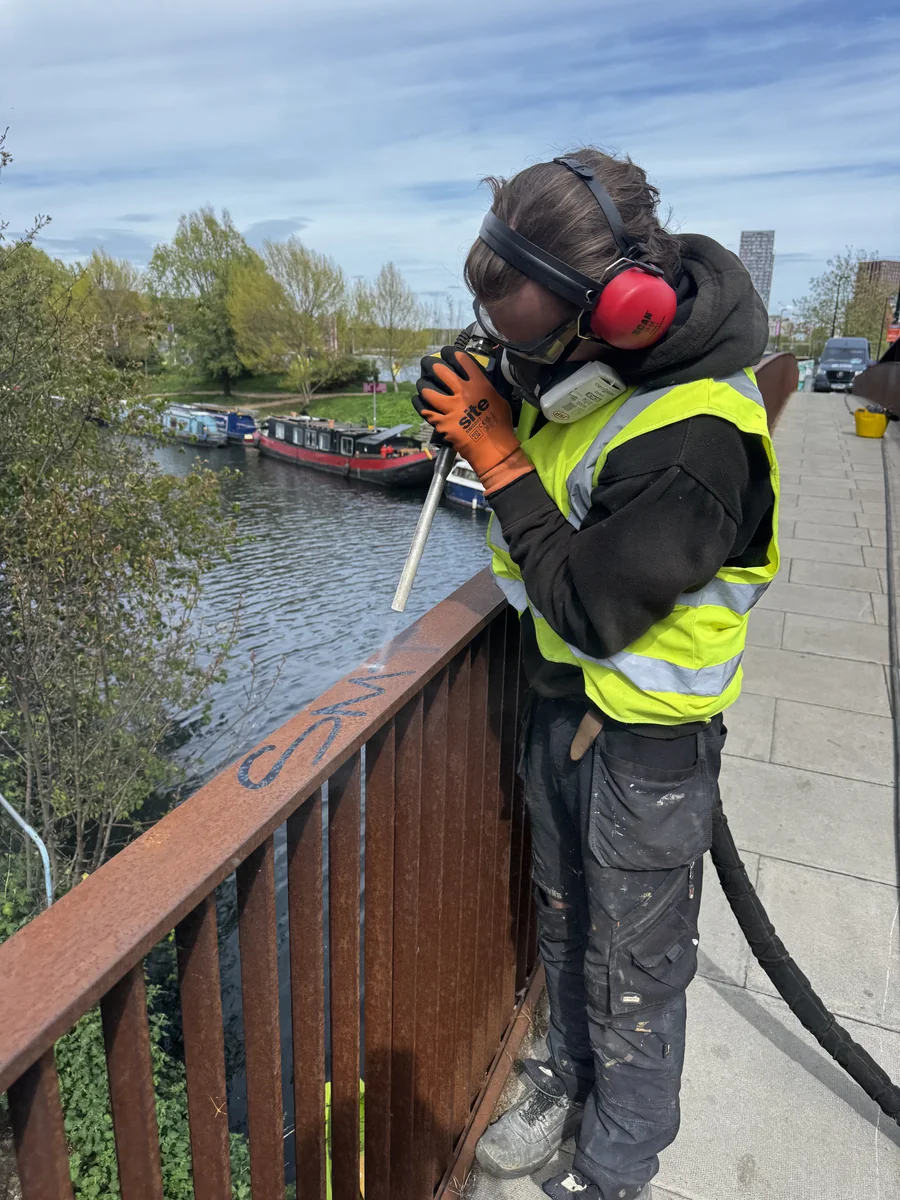
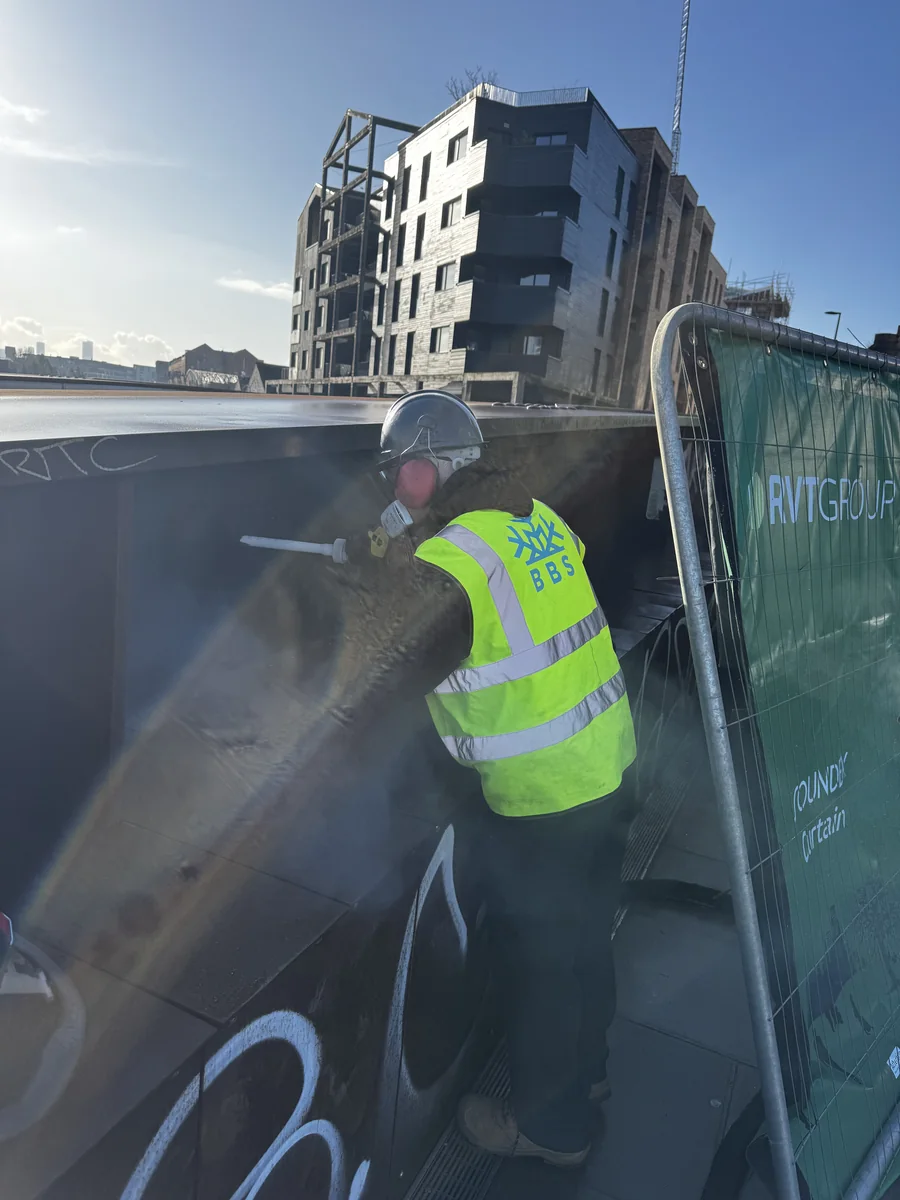
Blasting in progress. The second frame shows what made the job unusual — the water, and the moored boats, directly below the work.
Protecting the public while we worked
The bridge stayed open as a public footway, and it sits in the middle of a residential area with flats overlooking both approaches. Dry ice blasting is loud, typically 100 to 120 dB(A) at the nozzle, which is the method's main drawback and not something to gloss over.
So we enclosed the working face in acoustic curtains rather than simply coning off an area and getting on with it. They cut the noise reaching pedestrians and nearby homes, contained the removed paint particulate, and kept the work zone visually screened from people using the bridge.
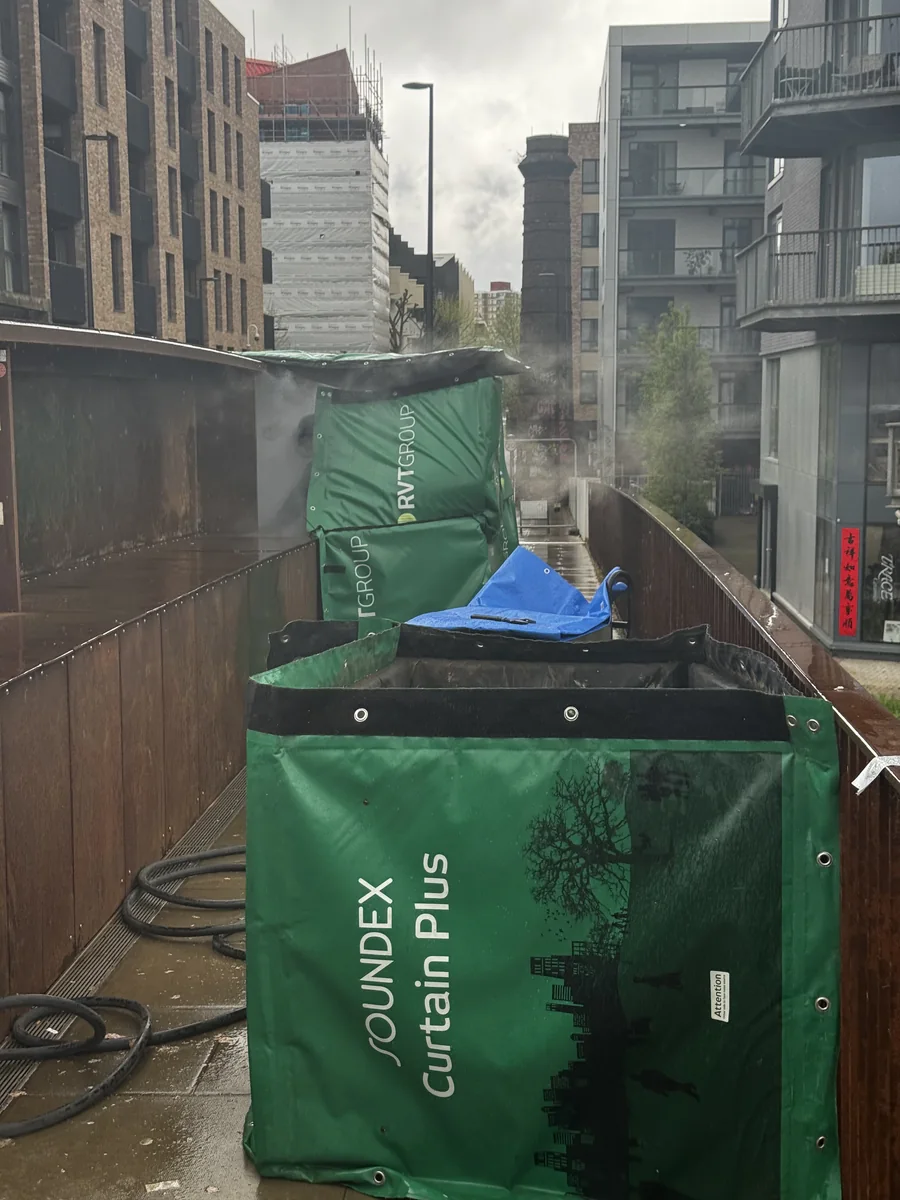
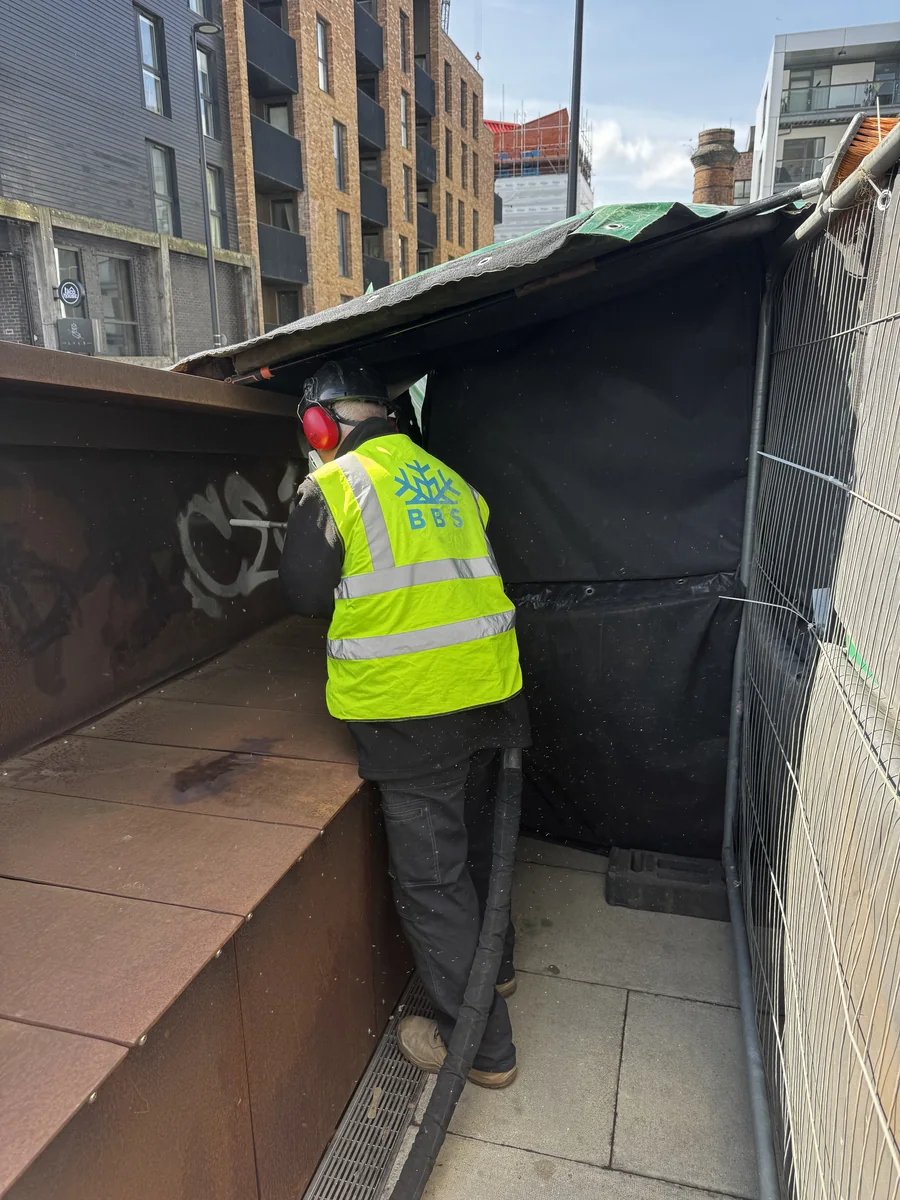
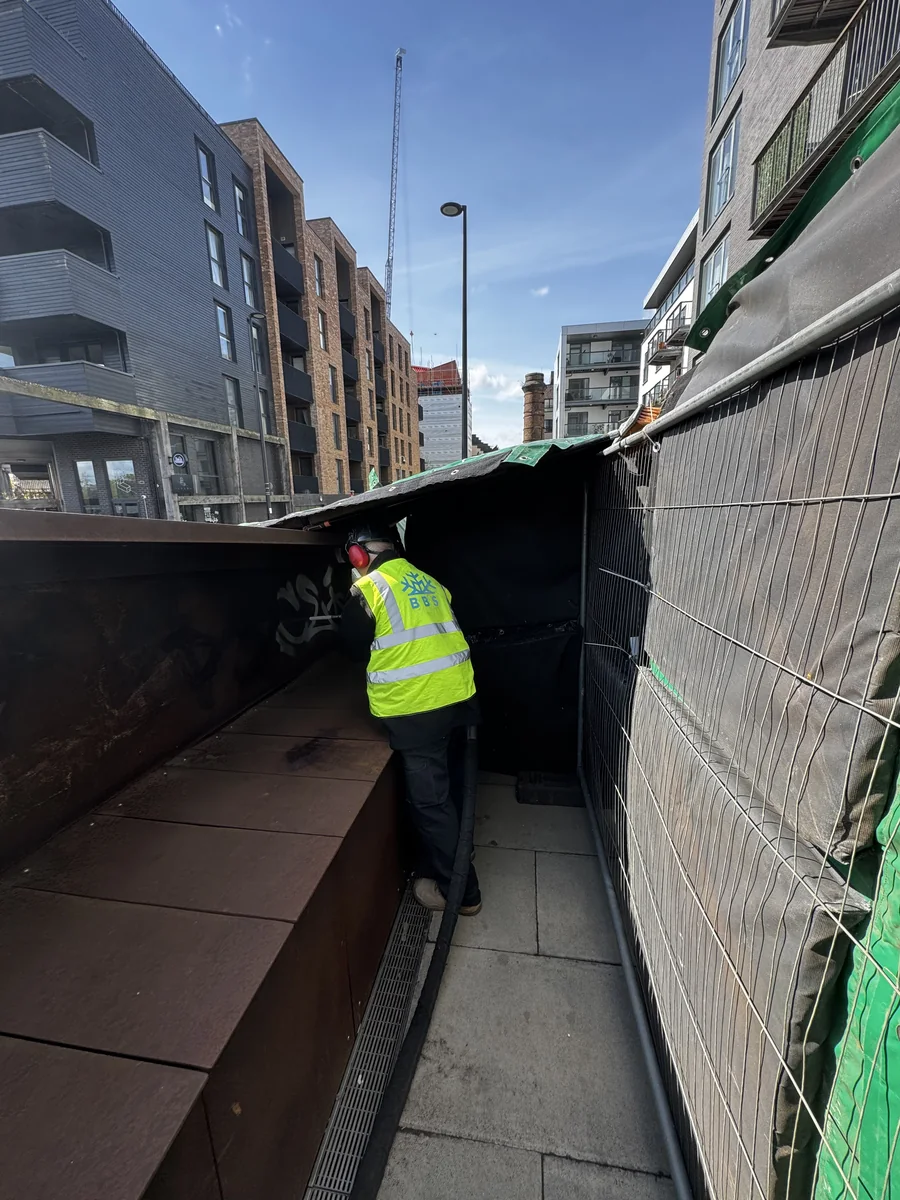
Acoustic curtain panels rigged around the working face — noise control for residents and pedestrians, and containment for the removed paint.
The results
 Before
 After
 Before
 After
No re-coating was needed, and that matters on a structure like this. Corten is specified precisely so it never needs painting. Any repair that ends in a coat of paint has quietly converted a maintenance-free structure into one that needs repainting every few years.
Why it matters
Weathering steel is increasingly common on bridges, sculpture, cladding and public realm work, and it attracts tagging. Most graffiti contractors will quote for it exactly as they would for concrete or brick, and the patina is the casualty.
If you manage corten, or any structure over water, the question to ask a contractor is not how quickly they can remove the graffiti. It is what their method leaves behind — on the surface, and in the river.
Send photos of the affected structure and we will tell you what can be recovered and how. Free site visits across Bedfordshire, Cambridgeshire and Hertfordshire, and we travel for specialist work like this.
Restore and protect your surfaces
Send us a few photos and we'll come back with a clear, fixed quote. Free site visits across Bedfordshire, Cambridgeshire and Hertfordshire.