Home / Services
Surface preparation, industrial cleaning and protective coatings
Five processes under one roof, so the right one gets used on your surface instead of the only one the contractor owns.
Dry ice blasting
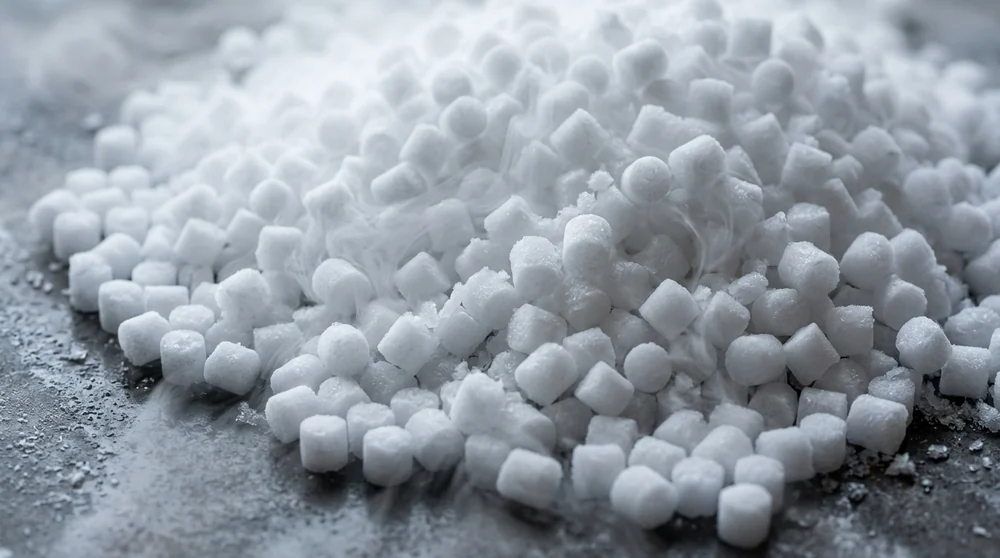
Dry ice blasting is our core process. Pellets of solid CO₂ are fired at the surface, freeze the contaminant, shatter it and then vanish into gas. The surface underneath is untouched and there is no grit or water left to clean up.
It is the right choice when the substrate matters: production machinery that cannot be stripped down, electrical panels and wiring looms, moulds and tooling, heritage brick and timber, food-production lines, fire-damaged joists, and vehicle chassis.
- Paint, lacquer and powder coating removal
- Soot, char and smoke damage after fire
- Grease, oil and carbon build-up on plant
- Mould and biological growth in lofts and voids
- Adhesive, label and sealant residue
- Release agents on moulds and tooling
Dustless blasting
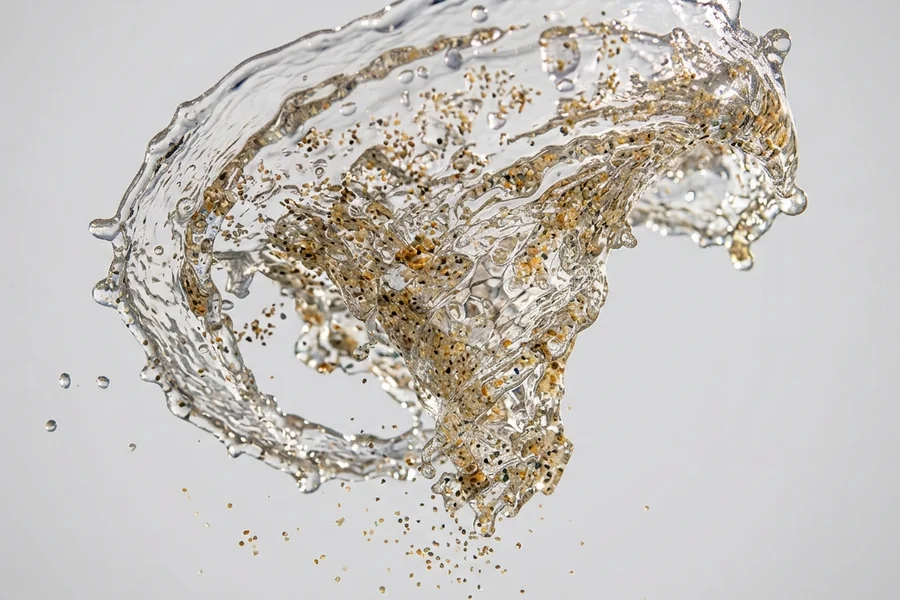
Dustless blasting, also called wet abrasive or slurry blasting, introduces water into the abrasive stream so every grain of media is wrapped in a droplet. When it hits the surface the droplet collapses and traps the dust instead of throwing it into the air.
That makes it usable in yards, car parks and residential streets where dry sandblasting would need full containment, and the water cools the substrate so thin panels do not warp.
- Up to 92% less airborne dust than dry sandblasting
- No heat distortion on thin steel and vehicle panels
- Around 50% less media used for the same area
- Suitable for brickwork, render, steelwork and plant
- Lower containment and disposal costs
Mixed-medium blasting
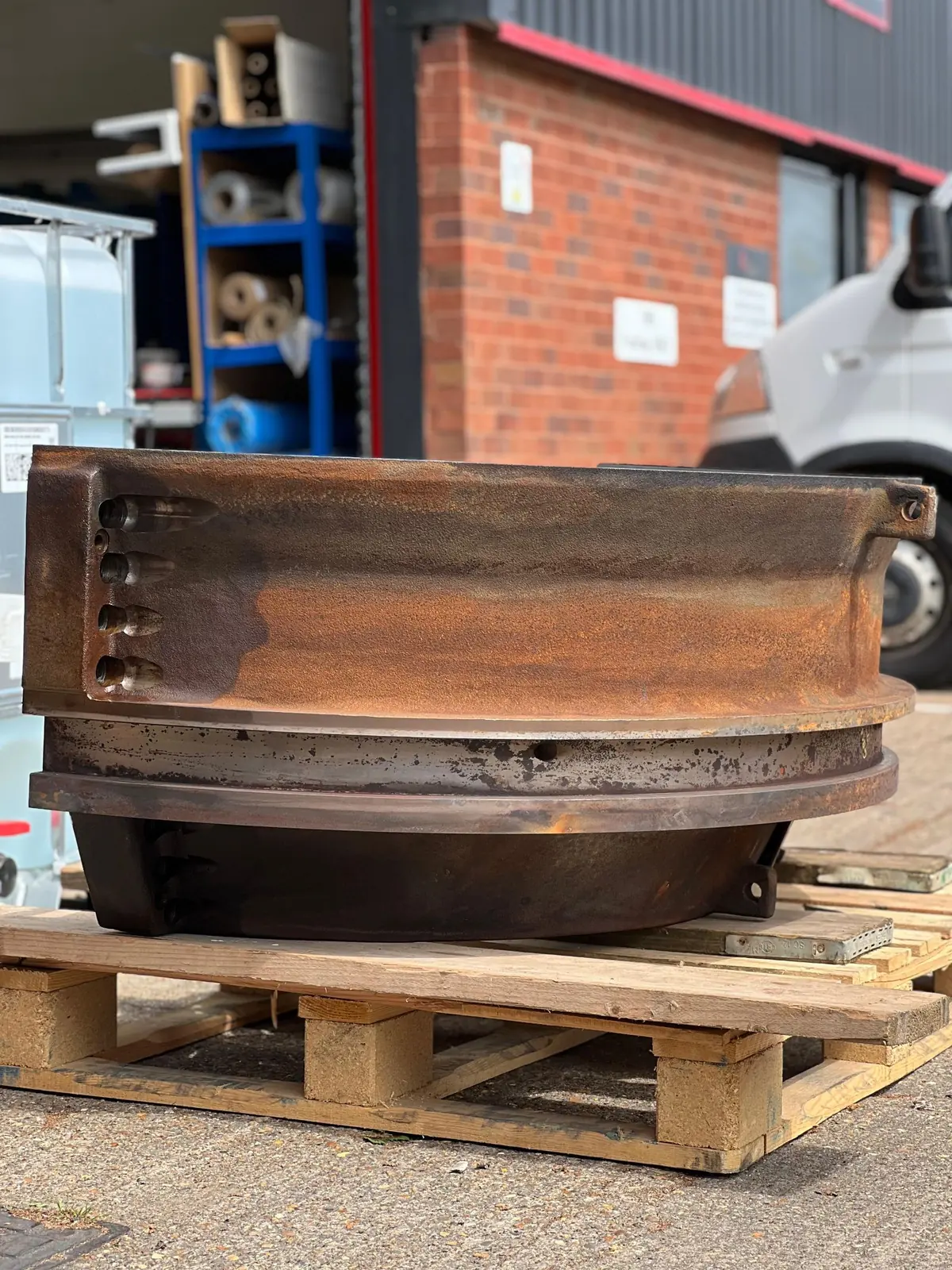
Where a job needs genuine aggression, we run steel grit or glass bead in roughly an 80/20 mix with dry ice. You get the cutting power of conventional abrasive with far less dust and a cleaner working area.
This is the process for heavy mill scale, thick multi-layer paint stacks and structural steel that has to be blasted to a specified profile before a protective coating goes on.
- Heavy rust, scale and multi-layer paint
- Achieves a measurable anchor profile for coatings
- Structural steel, plant frames and heavy fabrications
- Recovered and screened media where required
Industrial spray painting
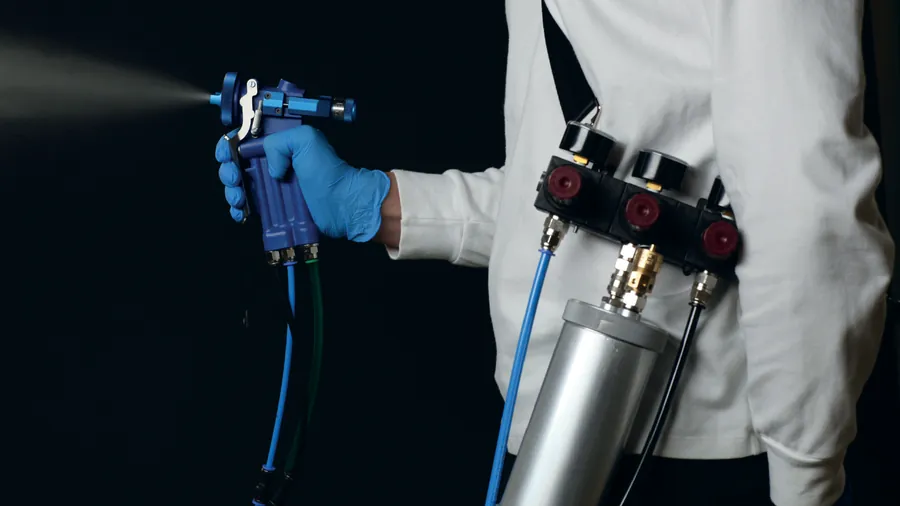
We finish what we prepare. Wet spray application for machinery, structural steel, plant rooms, marine and commercial assets, on site or in the shop.
Every gun we run is our patented T.A.S.S. Twin Air Spray System, which controls atomising, fan and flow pressure separately. Less bounce-back means less overspray drift, a better finish and 20-40% less paint on the invoice.
- On-site application with controlled overspray
- Primers, epoxies, polyurethanes and marine systems
- Structural steel, plant, tanks and cladding
- 20-40% material saving versus standard guns
Protective & bespoke coatings
Through our partnership with Coating Kings we specify and apply the protective layer that keeps the surface clean once we have restored it: anti-corrosion systems, marine-grade coatings, hydrophobic ceramics, antimicrobial finishes and Swiss Grip non-slip.
Because preparation and coating come from the same team, there is one point of responsibility and no argument about whose fault a coating failure is.
- Anti-corrosion and marine-grade systems
- Antimicrobial coatings for kitchens, care and healthcare
- Hydrophobic nano and ceramic sealants
- Swiss Grip non-slip and anti-graffiti finishes
Spray foam insulation removal
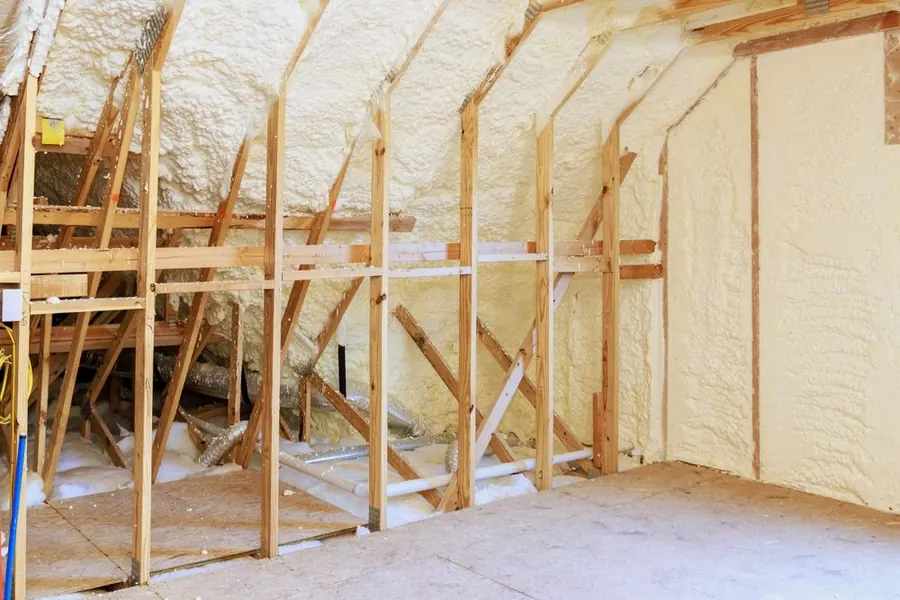
Cured spray foam bonds hard to rafters, brick and metal, and scraping or grinding it off damages the timber underneath. Dry ice blasting shears it away without abrading the wood, which is what surveyors and lenders want to see.
We work on lofts, roof voids, warehouses, barns and pre-sale remedial jobs, with IPAF, CSCS and confined-space certified teams.
- Loft and roof spaces, rafters and joists
- Warehouse, agricultural and commercial roofs
- Mortgage, survey and insurance-driven removals
- Dust-controlled, low-mess working
Choosing the right process
Which blasting process is right for my job?
It depends on the substrate and the contaminant. Dry ice for delicate surfaces, live plant and anything that must stay dry. Dustless for masonry, steelwork and outdoor jobs where dust matters. Mixed-medium where you need a real anchor profile before coating. We will tell you which one we would use and why before you commit.
Can you work on site while we keep operating?
Usually yes. Dry ice blasting needs no water and produces no secondary waste, so machinery can often be cleaned in place during a shift changeover rather than during a full shutdown.
Do you prepare and coat, or just prepare?
Both. We can hand over a prepared surface, or prepare, prime and finish it with our own spray teams and protective coating systems so there is a single warranty and a single point of contact.
Restore and protect your surfaces
Send us a few photos and we'll come back with a clear, fixed quote. Free site visits across Bedfordshire, Cambridgeshire and Hertfordshire.